

What Does Coffee Processing Mean for Your Cup?
Coffee processing, formally called post-harvest processing, is the set of steps that transform a freshly picked coffee cherry into the stable green bean a roaster eventually buys. Most coffee drinkers assume flavor lives in the roast. It doesn’t. By the time a roaster touches those beans, the foundational flavor decisions have already been made on a drying bed thousands of miles away. Understanding what coffee processing means, and why those choices matter, changes how you read a bag label forever.
Table of Contents
- Key takeaways
- What coffee processing means: key steps and goals
- The three main coffee processing methods
- Fermentation and drying: the real flavor levers
- Home vs. commercial coffee processing
- How processing shapes specialty coffee markets
- My honest take on processing complexity
- Experience processing through every cup
- FAQ
Key takeaways
| Point | Details |
|---|---|
| Processing shapes flavor first | The method used to remove the cherry fruit determines a coffee’s core flavor profile before roasting begins. |
| Three main methods exist | Natural, washed, and honey processes each produce distinctly different taste outcomes from the same raw cherry. |
| Moisture is everything | Drying coffee to 10–12% moisture is the single most critical factor for shelf stability and preventing mold. |
| Fermentation adds complexity | Controlled fermentation during processing builds the biochemical compounds responsible for fruity, floral, or wine-like notes. |
| Transparency is growing | Specialty coffee buyers increasingly demand clear processing disclosures to verify flavor authenticity and food safety. |
What coffee processing means: key steps and goals
Post-harvest processing covers every stage between picking a ripe coffee cherry and producing a dry green bean ready for export. The cherry itself is a fruit, roughly the size of a grape, with skin, pulp, mucilage, parchment, and finally the seed we call a coffee bean at the center. Processing removes all the layers surrounding that seed in a controlled way.
The three core stages are depulping, fermentation, and drying. Each one is a decision point, and each decision leaves a fingerprint on the final cup.
Depulping removes the outer skin and most of the fruit pulp. Depending on the method, this happens mechanically with a depulping machine or not at all, with the whole cherry left intact. What stays on the bean after depulping determines what flavors develop next.
Fermentation follows in washed and honey processing. During fermentation, naturally occurring microbes break down the sugars in the remaining mucilage layer. This biochemical activity is not random. It directly shapes acidity, sweetness, and aromatic complexity in the finished cup. A longer fermentation creates deeper, more complex flavors. An uncontrolled one creates defects.
Drying brings the processed bean down to a moisture target of 10–12%, the point at which microbial growth stops and the bean becomes shelf stable. Too wet and you get mold. Too dry and the bean becomes brittle, cracking during roasting.
- The coffee cherry must be processed within 12 hours of picking to prevent rot and mycotoxin development.
- Fermentation duration ranges from 12 hours to several days depending on method, climate, and intended flavor outcome.
- Drying can happen on raised African beds, patios, or mechanical dryers, with each surface affecting airflow and consistency.
- Green bean quality at export is the direct product of how precisely these steps were executed at origin.
Pro Tip: When reading a bag label, look for the processing method alongside the origin. A washed Ethiopian and a natural Ethiopian from the same farm taste like completely different coffees. The cherry tells you where it came from. The process tells you who it became.
The three main coffee processing methods
Understanding coffee processing techniques becomes much more concrete when you compare the three dominant approaches side by side. Here is how each method works and what it produces.
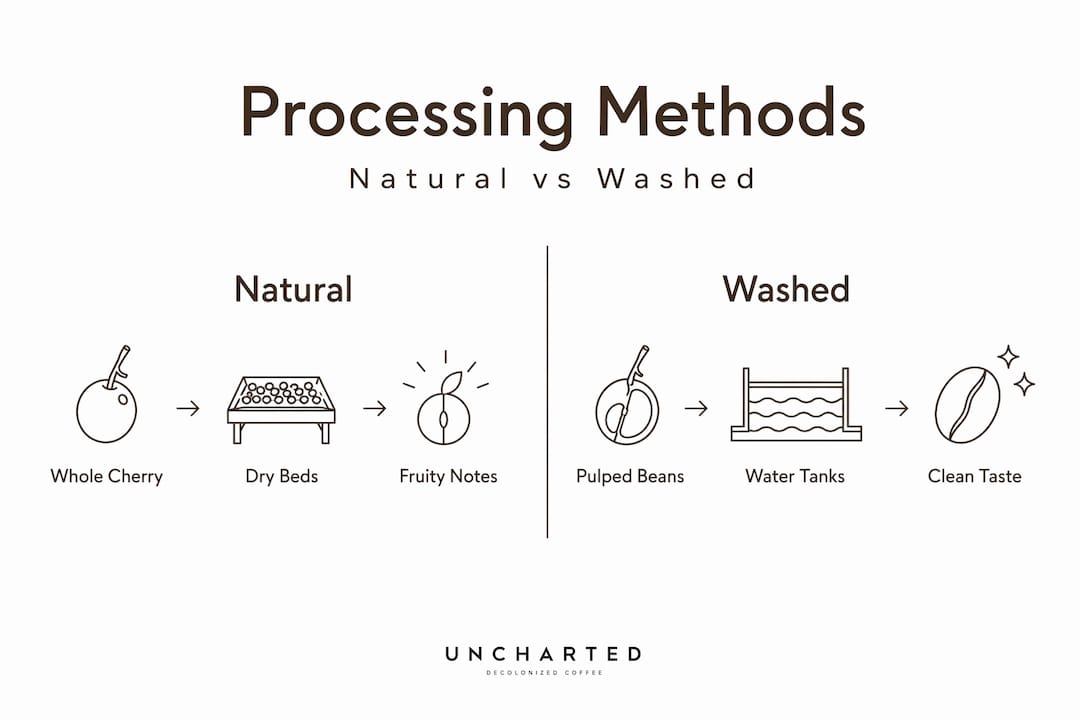
| Method | What happens | Flavor profile |
|---|---|---|
| Natural (dry) | Whole cherry dries intact for 2–4 weeks | Fruity, wine-like, full body, complex |
| Washed (wet) | Pulp removed before drying; fermentation tank step | Clean, bright acidity, clarity, terroir-forward |
| Honey | Partial mucilage retained during drying | Sweet, balanced, medium body, nuanced |
The natural process, also called dry process, is the oldest method. Whole cherries are spread on drying beds and left for two to four weeks until the fruit dries around the bean. During this time, the bean absorbs the sugars and flavor compounds from the drying fruit. The result is a coffee loaded with berry, stone fruit, and sometimes wine-like characteristics. Ethiopia’s Yirgacheffe naturals are the textbook example. You can taste the process.
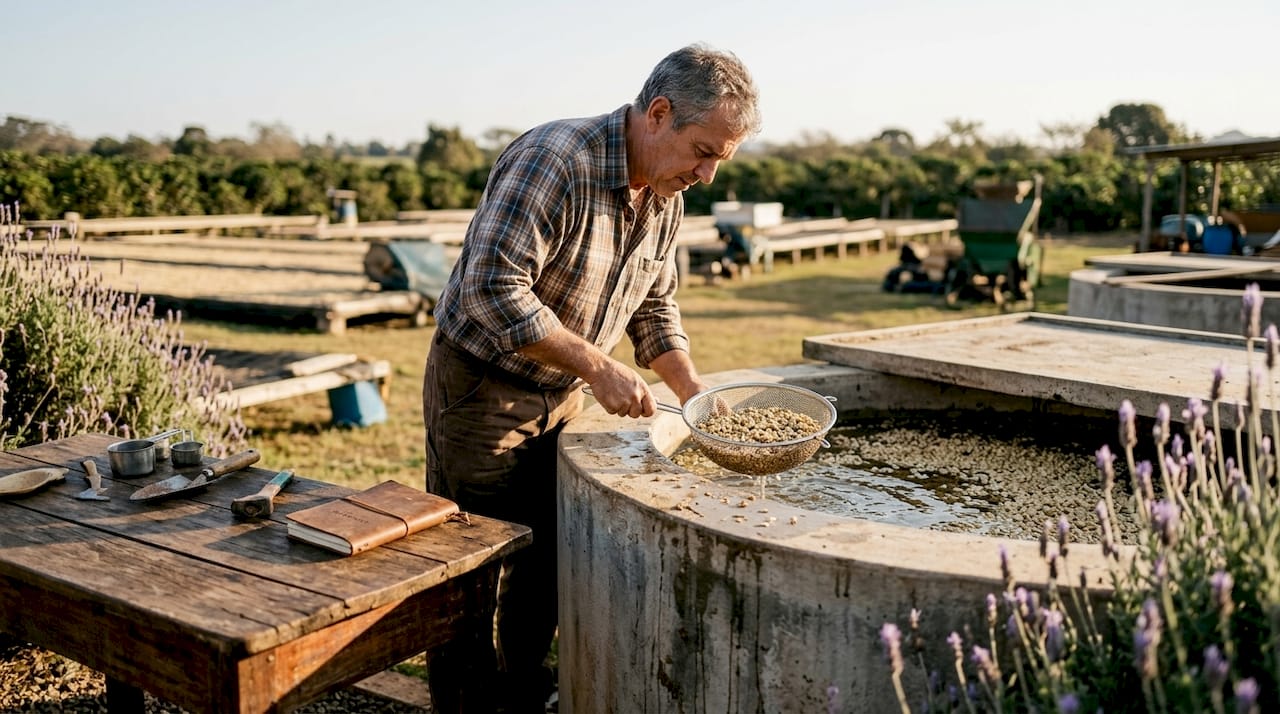
The washed process works in the opposite direction. Fruit and mucilage are removed before drying begins, which means the bean dries clean and the flavor that emerges comes almost entirely from the seed itself. Washed processing produces coffees with bright acidity, clarity, and an expression of terroir that naturals can sometimes obscure. Specialty buyers who want to evaluate origin character often prefer washed lots precisely because there is nowhere for defects to hide.
The honey process sits between the two. Producers remove the skin but leave varying amounts of mucilage on the bean during drying. Yellow, red, and black honey designations refer to how much mucilage stays, with black honey having the most and resembling naturals in body and sweetness.
Here is a simple way to think about the three methods in sequence:
- Natural: fruit stays on, flavors transfer directly from cherry to bean over weeks of contact.
- Honey: skin removed, partial fruit contact continues through drying, creating sweetness without full fermentation intensity.
- Washed: all fruit removed first, clean fermentation follows in a tank, then drying produces the clearest expression of the bean’s origin.
You can explore how natural process coffee affects flavor in more detail at Uncharted Coffee’s learning blog.
Fermentation and drying: the real flavor levers
This is where coffee processing explained at the surface level starts to fall short. Most overviews describe fermentation as a simple step between depulping and washing. That undersells it considerably.
Fermentation is an active biological process. Wild yeasts and bacteria consume the sugars in the mucilage layer, producing acids, alcohols, and esters as byproducts. Those compounds are not washed away entirely. They become part of the bean’s cellular structure and reappear as flavor in the cup. A clean 18-hour fermentation in cool water produces gentle brightness. An extended 72-hour fermentation at higher temperatures can produce funky, almost fermented fruit intensity.
The risks are real too. Uncontrolled fermentation introduces butyric acid, the compound responsible for the vomit-like defect noted in poorly managed lots. Fermentation and drying are widely recognized as the two most significant variables affecting coffee quality at origin.
Drying adds its own complexity. Sun-drying on raised beds allows airflow from below and produces even moisture removal. Patio drying on concrete is faster but can lead to uneven moisture and cracking. Mechanical driers solve consistency problems but strip out some of the nuanced development that slow sun-drying creates.
- Moisture below 12% is non-negotiable for preventing mold during storage and transport.
- Temperature spikes during drying can case-harden the outer layer of the bean, trapping excess moisture inside.
- Cherries on drying beds must be turned regularly to prevent fermentation hot spots and uneven drying.
- Shade-drying slows the process but protects delicate aromatic compounds from UV degradation.
Pro Tip: If a bag describes a coffee as having “controlled fermentation” or lists fermentation hours on the label, that producer tracked this process carefully. That level of documentation is a strong indicator of quality and transparency.
Co-fermentation, a newer technique where producers add external ingredients like fruit juice or specific yeast strains to the fermentation tank, has produced some genuinely extraordinary flavor results. It has also sparked real debate about authenticity in the specialty sector, with transparency concerns about whether consumers and buyers can verify what actually happened at the farm.
Home vs. commercial coffee processing
Some coffee growers and enthusiasts attempt small-scale processing at home or on micro-farms. It is a genuinely educational experience, and understanding where it gets difficult illuminates why commercial operations are built the way they are.
At home, you can depulp fresh cherries manually using your hands or a hand-crank depulper. The mucilage removal step is harder. Commercial facilities use friction-based mucilage removers that strip the sticky layer cleanly. At home, a method called the pinch technique works for small batches, rubbing beans against each other in water to loosen the layer. Getting it completely clean takes patience.
- Manual mucilage removal risks leaving inconsistent residue that causes uneven fermentation.
- DIY drying works on a small scale using mesh screens or raised racks, but controlling airflow and turning frequency is labor-intensive.
- Parchment removal at home is where most damage happens. Mechanical parchment removal requires careful calibration to avoid cracking the bean beneath.
- Commercial operations achieve consistency through controlled water temperatures, calibrated equipment, and moisture meters that confirm dryness before the bean moves to the next stage.
Home processing teaches you exactly how much craft goes into a single green bean. It also makes you deeply appreciative of the producers who do this thousands of times per harvest at a standard that meets specialty cupping scores. The role of bean origin and processing in flavor is something you feel differently once you have held a coffee cherry in your hand and understood what it takes to get from that moment to your cup.
How processing shapes specialty coffee markets
Coffee processing methods are no longer just agricultural decisions. They are marketing and positioning decisions, and increasingly, they drive purchasing behavior in the specialty sector.
The global coffee bean market sits at $36.36 billion as of 2026 and is projected to reach $56.9 billion by 2034, growing at a 5.1% annual rate. Much of that growth traces directly to specialty and premium-processed coffees commanding higher prices at retail and wholesale.
| Processing trend | Market driver | Consumer impact |
|---|---|---|
| Natural process premiums | Unique flavor intensity | Higher willingness to pay |
| Washed terroir focus | Traceability and origin purity | Trust and transparency |
| Experimental/co-ferments | Novelty and flavor innovation | Polarizing; demands education |
| Honey process growth | Balance between approachability and complexity | Broadening specialty audience |
The tension between traditional and experimental processing sits at the center of current specialty coffee conversations. Fully washed coffees have long been the benchmark for evaluating origin character. A great washed Kenyan shows you exactly what that soil and altitude produce. An experimental co-fermented lot from the same farm tastes remarkable but tells you more about the producer’s fermentation tank than the land itself.
Neither approach is wrong. They serve different purposes, and specialty coffee as a category is large enough to hold both. What the market is demanding more urgently now is honest disclosure about what happened between cherry and bag.
My honest take on processing complexity
When I started paying close attention to coffee, I assumed roast level explained everything. A light roast was bright, a dark roast was bold, and that was the story. Processing humbled me quickly.
The first time I tasted a natural Ethiopian next to a washed lot from the same cooperative, the difference was so pronounced I genuinely questioned whether they were the same crop. They were. Different processing method, entirely different cup. That experience shifted something.
What I have learned from spending time with producers and roasters who care about this craft is that processing is where intention lives. Roasting reveals character. Processing creates it. The decisions made in the first 24 hours after picking, including how the cherry is handled, how fermentation is timed, and how drying is managed, are the decisions that determine what lands in your morning cup weeks or months later.
My honest reservation about the co-fermentation trend is not that it produces bad coffee. Some of it is genuinely extraordinary. My concern is the gap between what a label says and what a buyer can verify. Transparency in processing is not a niche demand from picky enthusiasts. It is how trust gets built across an entire supply chain.
What I would tell any coffee lover is this: start reading the process on the label the same way you read the origin. It will not tell you everything, but it will tell you more than most people realize.
— Jasmine
Experience processing through every cup
If understanding coffee processing has you reading bag labels differently, that is exactly the kind of shift Uncharted Coffee was built for. At Uncharted, sourcing decisions start with the question of how a coffee was grown and processed, not just where it came from.

Every coffee in the Uncharted lineup is chosen because it reflects a deliberate processing decision that shows up in the cup. Whether you are drawn to the clean clarity of a washed origin or the fruit-forward depth of a natural, you can taste the difference when the sourcing is intentional. Explore the full Uncharted collection to find a processing style that fits how you want to start your day. For something truly distinctive, the Revive Cold Brew from Costa Rica’s highlands shows what regenerative sourcing and precise processing can produce together.
FAQ
What does coffee processing mean in simple terms?
Coffee processing refers to the steps used to remove the fruit layers surrounding a coffee bean after harvesting, preparing it for roasting. The method chosen directly shapes the flavor, acidity, and body of the final cup.
What are the main types of coffee processing?
The three main types are natural (dry), washed (wet), and honey processing. Each method differs in how much fruit contact the bean experiences during drying, producing distinctly different flavor profiles.
How does processing method affect coffee flavor?
Natural processing creates fruity, wine-like flavors from extended cherry contact, while washed processing produces cleaner, brighter cups. Honey processing sits between the two, offering sweetness and balance.
Why is drying so critical in coffee processing?
Drying reduces bean moisture to 10–12%, which stops microbial growth and prevents mold during storage and transport. Uneven or incomplete drying is one of the most common causes of quality defects in green coffee.
What is co-fermentation in coffee processing?
Co-fermentation involves adding external ingredients such as fruit juice or specific yeast strains to the fermentation tank to influence flavor development. It produces intense, novel flavors but has raised transparency and authenticity questions in the specialty coffee market.