

What Is Natural Process Coffee and Why It Matters
Most coffee drinkers have tasted a natural process coffee without realizing it. That cup with unexpected blueberry notes, the one that tasted almost like fruit jam in a mug — that was natural process coffee doing exactly what it’s supposed to do. What is natural process coffee, really? It’s coffee dried with the entire fruit still wrapped around the seed, letting the bean absorb sweetness and complexity directly from the cherry. The result is something no other coffee processing method can replicate. And understanding how it works changes how you taste every cup.
Table of Contents
- Key takeaways
- What natural process coffee actually is
- How natural processing shapes the flavor in your cup
- Benefits and challenges of natural processing
- How to choose and enjoy natural process coffees
- My take on natural process coffee
- Explore natural process coffee with Drinkuncharted
- FAQ
Key takeaways
| Point | Details |
|---|---|
| Fruit stays on during drying | Natural process coffee dries whole, letting the bean absorb flavor compounds from the cherry flesh. |
| Flavor is bold and fruit-forward | Expect jammy sweetness, fuller body, and integrated acidity compared to washed coffees. |
| Water usage is significantly lower | Natural processing requires sun and labor, not the large water volumes that washed methods demand. |
| Roast level shapes the final cup | Lighter roasts preserve the fruit clarity that makes quality natural coffees distinctive. |
| Quality depends on careful management | Cherry selection and drying oversight separate exceptional naturals from flawed, over-fermented ones. |
What natural process coffee actually is
Natural process coffee is dried with the fruit still attached, and only hulled after drying is complete. That single fact separates it from every other major processing method. In washed coffee, the fruit is stripped away before drying. In natural processing, the seed sits inside the whole cherry for weeks while moisture slowly leaves the fruit.
Here is how the process unfolds from harvest to green bean:
- Selective harvesting. Ripe cherries are hand-picked at peak ripeness. This step matters more in natural processing than in any other method because overripe or underripe cherries directly affect fermentation quality during drying.
- Sorting and floating. Cherries are sorted by density, often using water floats to remove damaged or hollow fruit. Only the best cherries move forward.
- Spreading on raised beds or patios. Whole cherries are laid out in thin, even layers on raised drying beds or concrete patios in direct sunlight. Thin layers allow airflow and prevent mold.
- Regular turning. Workers turn the cherries multiple times per day to promote even drying and prevent fermentation from going off-track. This is labor-intensive and non-negotiable for quality.
- Extended drying period. The drying phase lasts 2 to 4 weeks until the moisture content reaches approximately 10 to 12 percent. The cherries shrink and darken, looking almost like raisins by the end.
- Hulling. Once dry, the hardened fruit layers are mechanically removed to reveal the green coffee bean inside.
Weather is a major variable in this process. Humidity, rain, and temperature swings can accelerate or disrupt fermentation. That’s why natural processing is historically linked to water-scarce regions like Ethiopia and Yemen, where the dry climate makes extended outdoor drying practical and where wet processing infrastructure is difficult to build.
Pro Tip: If you’re sourcing natural coffees and want consistency, look for producers at higher altitudes with dry harvest seasons. The slower, cooler drying conditions at elevation tend to produce cleaner, more nuanced fruit notes.
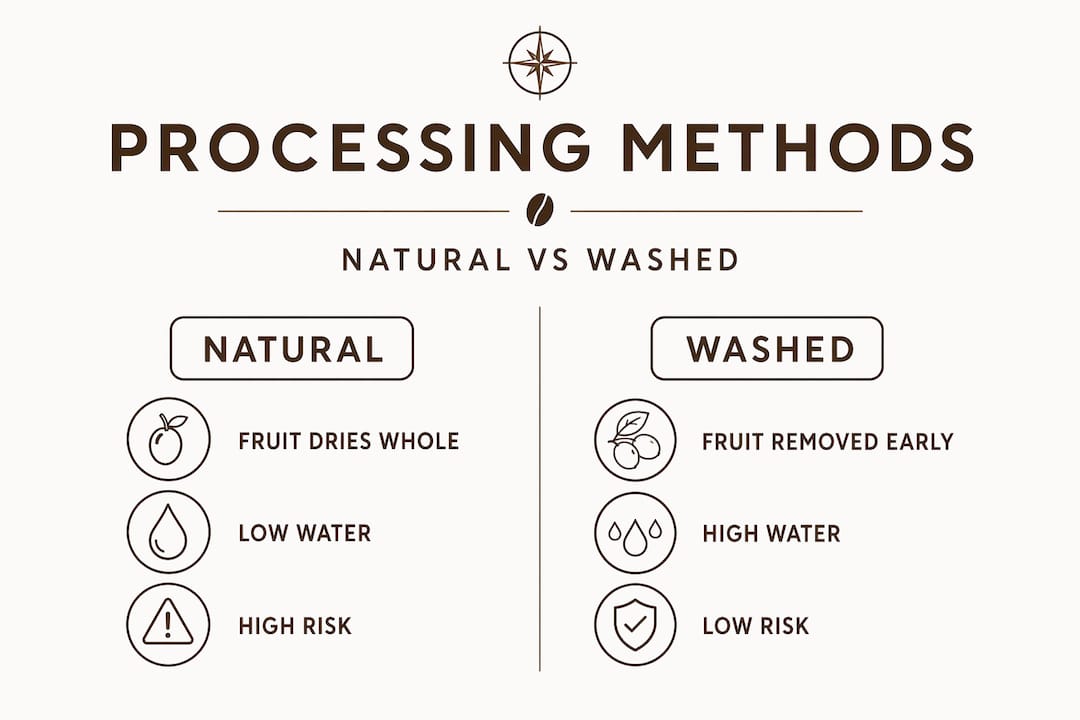
Compared to honey processing, which removes the outer skin but leaves some fruit mucilage on the bean, natural processing leaves the entire cherry intact. The result is maximum fruit contact and the most pronounced flavor development of any method.
How natural processing shapes the flavor in your cup
The flavor story of a natural coffee starts during those weeks on the drying bed. As the cherry dehydrates, the seed absorbs sugars, acids, and fermentation compounds from the surrounding fruit. Natural coffees absorb compounds from the entire cherry during drying, creating complex profiles that washed processing simply cannot produce.
What you actually taste in the cup reflects that process:
- Fruit-forward sweetness. Blueberry, strawberry, mango, and dried fig are common descriptors. These aren’t added flavors. They come directly from the fruit contact during drying.
- Fuller body. Natural coffees tend to feel heavier and more syrupy in the mouth compared to washed coffees, which are typically lighter and more tea-like.
- Integrated acidity. Rather than the bright, clean acidity you find in a well-processed washed coffee, naturals have a softer, rounder acidity that blends into the sweetness.
- Fermentation complexity. Controlled fermentation during drying adds depth, sometimes producing wine-like or chocolate notes that make naturals feel layered.
“Flavor differences in coffees often depend more on processing method than on variety or origin alone. Two coffees from the same farm can taste strikingly different if one is natural and the other washed.”
That quote reframes how you should think about coffee labels. Origin matters. Variety matters. But processing may be the single biggest lever a producer pulls when shaping what ends up in your cup.
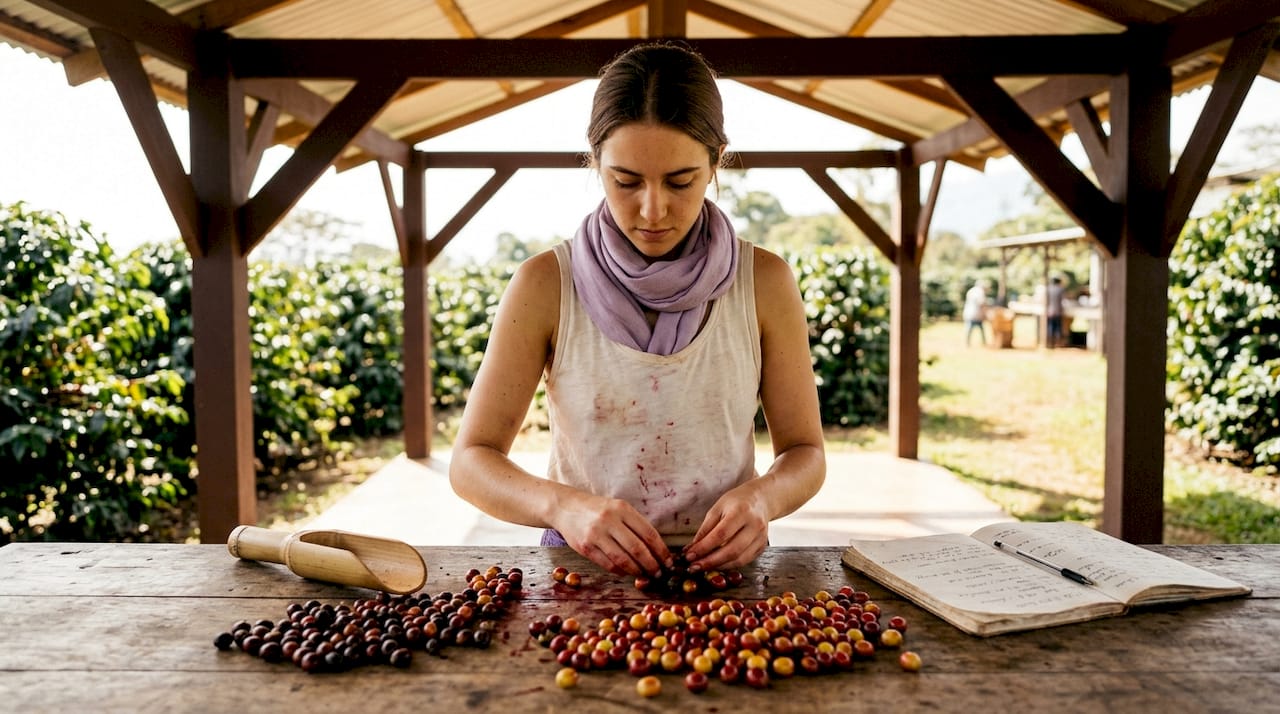
The risk in natural processing is over-fermentation. Poor drying management or overripe cherries can produce undesirable flavors: harsh winey notes, vinegar-like sharpness, or a fermented smell that overpowers everything else. The line between desirable complexity and outright defect is drawn by how carefully the producer manages those weeks on the drying bed.
Benefits and challenges of natural processing
Natural processing offers real advantages for producers, particularly those working in regions with limited water access or infrastructure.
| Factor | Natural process | Washed process |
|---|---|---|
| Water usage | Very low | Very high |
| Equipment needed | Minimal (drying beds, hulling) | Significant (depulpers, fermentation tanks) |
| Labor intensity | High (constant turning and monitoring) | Moderate |
| Drying time | 2 to 4 weeks | 1 to 2 weeks |
| Flavor profile | Fruit-forward, sweet, full-bodied | Clean, bright, crisp acidity |
| Quality consistency | Harder to control | Easier to standardize |
| Environmental impact | Lower water footprint | Higher water and wastewater concerns |
Natural processing uses far less water than washed processing, which makes it a genuinely sustainable choice in drought-prone or water-stressed growing regions. No large fermentation tanks, no constant water flow, no wastewater management. The sun and the labor of experienced workers do the work.
The challenge is that labor intensity and climate dependency make quality control difficult. A rainstorm during peak drying, a batch of cherries that weren’t sorted carefully enough, or a few days of inconsistent turning can compromise an entire lot. This is why well-executed natural coffees from reputable producers command a premium. The craft is real.
Pro Tip: When comparing natural vs washed coffee from the same origin, try brewing both with the same method and ratio. The contrast is one of the clearest ways to understand how processing shapes flavor, without any other variable changing.
How to choose and enjoy natural process coffees
Reading a coffee bag well is a skill, and it pays off when you’re hunting for quality naturals.
- Look for the processing method on the label. Specialty roasters almost always list it. “Natural,” “dry process,” or “sun-dried” all refer to the same method. If the bag doesn’t mention processing, that’s a signal the roaster isn’t prioritizing transparency.
- Check the tasting notes. Descriptors like blueberry, strawberry, tropical fruit, dark chocolate, or wine are strong indicators of a natural. Descriptors like jasmine, lemon, or green apple point toward washed.
- Consider the origin. Ethiopia, Brazil, and Yemen produce some of the world’s most celebrated natural coffees. Ethiopian naturals from regions like Yirgacheffe or Sidama are famous for their intense berry character. Brazilian naturals tend toward chocolate and nut with lower acidity.
- Tasting for quality vs. defects. Quality naturals have fruit notes that feel cohesive and ripe, like jammy stone fruit or dried berries. Defective naturals smell harsh, boozy, or sour in an unpleasant way. If the ferment note overpowers everything else, that’s a processing flaw, not a feature.
- Roast level matters more than you think. Natural coffees require roasting adjustments because their higher sugar content and fermentation compounds increase sensitivity to heat. Lighter roasts preserve fruit clarity. Darker roasts can muddy those notes into generic sweetness.
- Brewing methods that highlight naturals. Pour-over and AeroPress tend to showcase the clarity and complexity of a well-processed natural. Cold brew is another excellent option, since the long extraction draws out the sweetness and body without introducing bitterness.
My take on natural process coffee
I’ve spent years tasting coffees across processing methods, and naturals are still the ones that stop me mid-sip. Not because they’re always better, but because when they’re done right, they show you something no other method can.
What I’ve learned is that most consumers encounter naturals in one of two ways. Either they taste a spectacular Ethiopian natural and immediately want to understand what just happened to their palate. Or they taste a poorly processed one and write off the entire category as “too funky.” Both reactions make sense. The gap between a masterfully dried natural and a carelessly managed one is enormous.
The misconception I see most often is treating fruitiness as a sign of quality on its own. It isn’t. Fruit notes in a natural coffee should feel integrated, not like something was added or went wrong. When the fermentation is controlled and the cherry selection was careful, the fruit character is vibrant and specific. You can often identify the actual fruit. When it wasn’t managed well, it just tastes fermented.
From a roasting perspective, I find that roasters who understand naturals resist the urge to push development too far. The sugars in natural coffees caramelize faster, and over-roasting destroys the very thing that makes them worth buying. A skilled roaster treats a natural like something delicate, not something to be tamed.
Natural processing is also where specialty coffee’s diversity lives. Without it, we lose an entire dimension of what coffee can taste like. That matters, especially if you believe, as Drinkuncharted does, that a cup of coffee carries meaning beyond caffeine.
— Jasmine
Explore natural process coffee with Drinkuncharted
If this article has you thinking differently about what’s in your cup, that’s exactly where Drinkuncharted wants to meet you.

Drinkuncharted sources coffees with intention, tracing each lot back to the producers and practices that shape its flavor. Their Revive Cold Brew, regeneratively grown in Costa Rica’s highlands, is a strong starting point if you want to experience what thoughtful natural processing tastes like in a ready-to-drink format. The brand’s full cold brew collection also features naturally processed coffees selected for their fruit clarity and clean fermentation. Every product connects back to Drinkuncharted’s core mission: coffee as a ritual that restores, not just a product that delivers caffeine.
FAQ
What is natural process coffee?
Natural process coffee is dried with the whole fruit still wrapped around the seed, then hulled after drying is complete. This extended fruit contact gives natural coffees their characteristic sweetness, full body, and fruit-forward flavor.
How is natural process coffee different from washed coffee?
In washed coffee, the fruit is removed before drying. In natural processing, the fruit stays on throughout the drying period, which means the bean absorbs more sugars and fermentation compounds, producing bolder, sweeter, and more complex flavors.
Is natural process coffee better?
Neither natural nor washed is objectively better. Natural coffees offer more fruit complexity and body, while washed coffees tend to be cleaner and brighter. Quality depends on how carefully each method is executed by the producer.
Why does natural process coffee sometimes taste fermented?
Over-fermentation from poor cherry selection or inconsistent drying management can create harsh, winey, or vinegar-like off-flavors. Well-managed natural coffees show ripe, cohesive fruit notes rather than sharp fermented ones.
What brewing method works best for natural process coffee?
Pour-over, AeroPress, and cold brew all highlight the sweetness and complexity of natural coffees well. Lighter roast profiles preserve the fruit clarity that makes quality natural coffees distinctive.