

How to Grind Coffee Beans at Home for Better Flavor
When you grind coffee beans at home, you unlock something that a bag of pre-ground coffee simply cannot offer: flavor that hasn’t had time to fade. Ground coffee starts losing its aromatic compounds within minutes of grinding, which means the coffee you buy pre-ground has already given up most of what makes it worth drinking. This guide covers everything you need to go from whole beans to a genuinely great cup, including how to choose the right grinder, match your grind size to your brewing method, troubleshoot bitter or sour results, and even improvise when you don’t have a grinder on hand.
Table of Contents
Key Takeaways
| Point | Details |
|---|---|
| Grind fresh, every time | Grinding immediately before brewing preserves aroma and flavor that disappear within minutes of grinding. |
| Burr grinders beat blade grinders | Burr grinders produce consistent particle sizes that lead to even extraction and better-tasting coffee. |
| Match grind size to brew method | Espresso needs fine grounds, pour-over needs medium, and French press needs coarse for proper extraction. |
| Taste guides your adjustments | Bitter coffee means grind too fine; sour or weak coffee means grind too coarse. Adjust one variable at a time. |
| Store beans, not grounds | Keep whole beans in an airtight container and grind only what you need to maintain peak freshness. |
Essential equipment for grinding coffee at home
Before you grind a single bean, you need the right tools. The grinder you choose has more impact on your final cup than almost any other piece of equipment, including your brewer.
Burr grinders vs. blade grinders
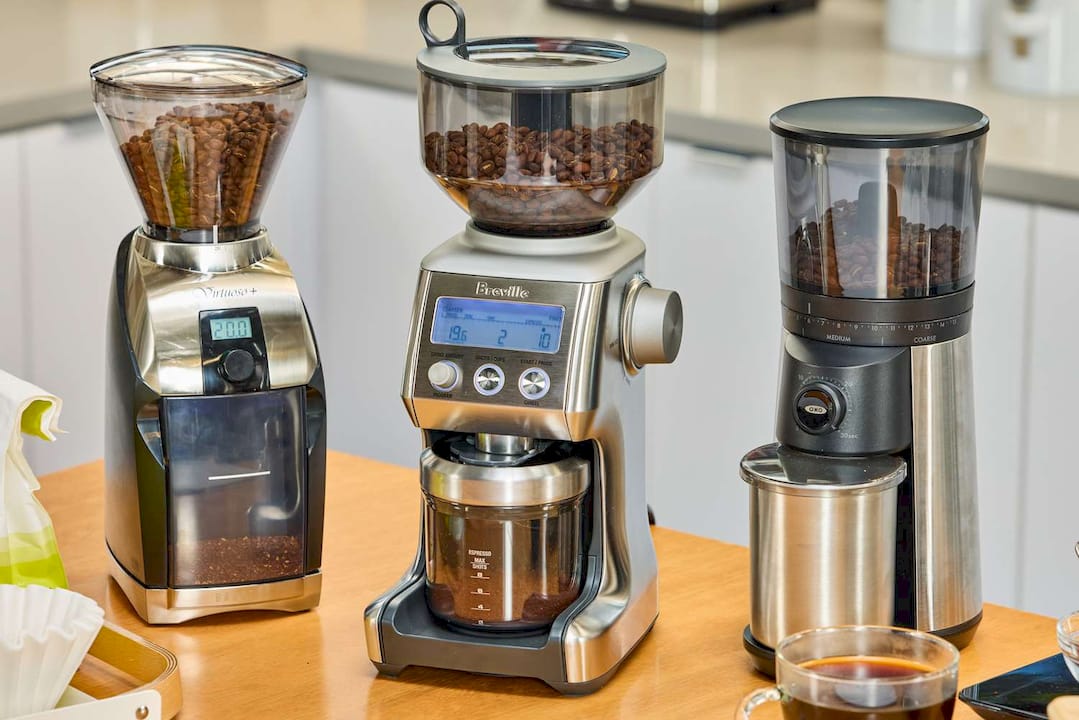
The difference between these two types is not subtle. Blade grinders chop beans unevenly, producing a mix of fine dust and large chunks in the same batch. That inconsistency creates uneven extraction, where some particles over-extract (bitter) while others under-extract (weak) in the same brew. Burr grinders produce superior consistency because two abrasive surfaces crush beans to a uniform size you can actually control.
Within burr grinders, you have two designs. Conical burrs use a cone-shaped inner burr rotating inside an outer ring. They generate less heat during grinding, which protects delicate flavor compounds. Flat burrs use two parallel rings and tend to grind faster, though they can run slightly hotter. For most home brewers, conical burr grinders in the $60 to $180 range offer the best balance of quality and value.
| Grinder Type | Grind Consistency | Price Range | Best For |
|---|---|---|---|
| Blade grinder | Poor (uneven) | $15 to $30 | Emergency use only |
| Conical burr (entry) | Good | $60 to $180 | Daily home brewing |
| Flat burr (mid-range) | Very good | $150 to $400 | Espresso and pour-over |
| Manual burr | Good to excellent | $30 to $150 | Travel, slow ritual brewing |
Manual grinders
A manual grinder is worth serious consideration if you value the process as much as the result. Manual grinders with ceramic burrs offer real control over grind size, produce minimal heat, and are easy to clean. They take more time and physical effort, but for a single cup in the morning, that effort becomes part of the ritual rather than an obstacle.
Storing your beans correctly
Your grinder choice matters less if your beans are stale before they reach it. CNET recommends airtight containers over paper bags, kept away from light, heat, and moisture. A ceramic or opaque canister with a one-way valve is ideal. Avoid the freezer for beans you use daily. The condensation from repeated temperature changes does more harm than the cold does good.
Pro Tip: Grind only two to four days’ worth of beans at a time if you must grind in advance. For most people, grinding right before each brew is the better habit to build.
How to grind coffee beans step by step
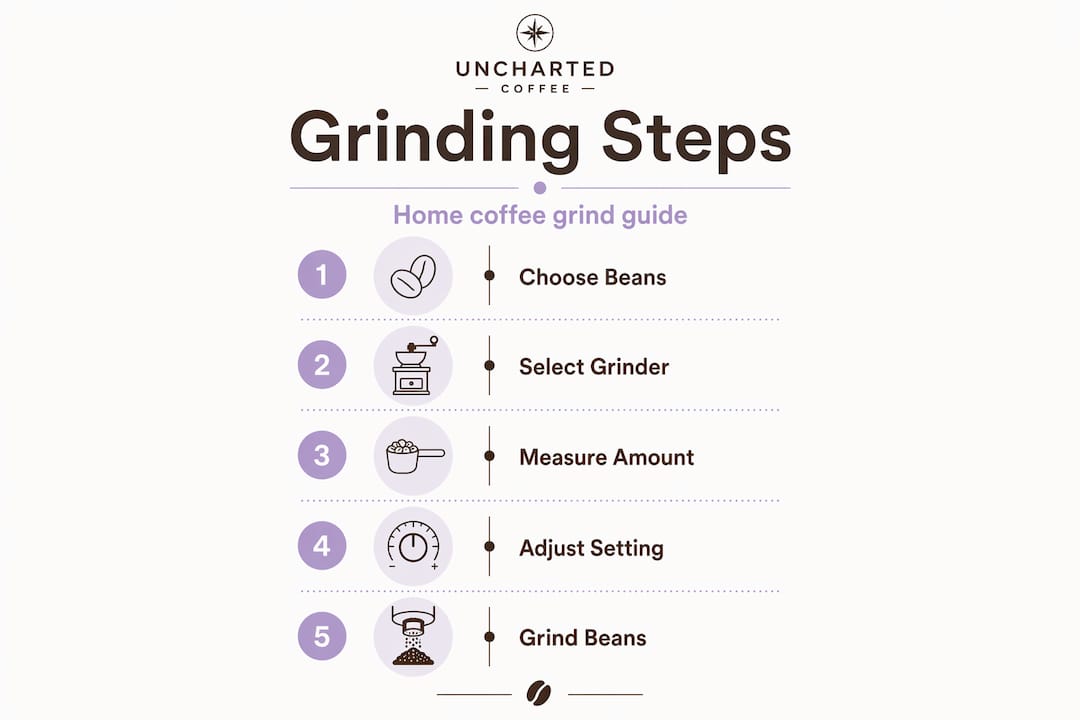
Once your equipment is ready, the process itself is straightforward. Getting it right consistently comes down to understanding grind size, dose, and timing.
Grind sizes and their brewing methods
Every brewing method has a grind size that works with its mechanics. The relationship is simple: the longer water contacts the grounds, the coarser the grind needs to be.
-
Extra coarse: Cold brew. Grounds look like coarse sea salt. Water steeps for 12 to 24 hours.
-
Coarse: French press. Chunky, distinct particles. Brew time is 4 minutes.
-
Medium coarse: Chemex and some drip brewers. Slightly finer than French press.
-
Medium: Standard drip coffee makers and pour-over methods like V60.
-
Medium fine: AeroPress with shorter brew times.
-
Fine: Espresso. Powder-like consistency. Brew time is 25 to 30 seconds under pressure.
-
Extra fine: Turkish coffee. Almost flour-like texture.
Grinding immediately before brewing is the single most impactful habit you can adopt. Freshly ground coffee releases CO2 (called blooming) that carries volatile aromatics directly into your cup.
Step-by-step grinding process
-
Weigh your beans. Use a kitchen scale. A standard ratio is 1 gram of coffee per 15 to 17 grams of water. Weigh before grinding, not after.
-
Set your grind size. Dial your grinder to the appropriate setting for your brew method. When in doubt, start medium.
-
Purge the grinder. If you changed grind settings, run a few grams of beans through first to clear old grounds from the burrs.
-
Grind and collect. Hold the collection cup steady. Tap lightly to settle grounds if using a portafilter or pour-over filter.
-
Brew immediately. Transfer grounds to your brewer and start within 60 seconds of grinding.
Pro Tip: Use a scale for your water too, not just your beans. Consistent ratios give you reliable results and make troubleshooting much easier when something tastes off.
You can explore brewing methods in depth to see how each technique interacts with grind size and extraction time.
Troubleshooting your grind size
Even experienced home brewers hit a wall where the coffee tastes wrong and they can’t identify why. Most of the time, grind size is the culprit.
Reading your cup for clues
Bitter or harsh coffee signals over-extraction, which means water pulled too many compounds from the grounds. The most common cause is a grind that’s too fine. Sour, thin, or weak coffee points to under-extraction, where the grind is too coarse and water passed through too quickly without picking up enough flavor. Ideal extraction yield sits between 18 and 22%, and grind size is the lever that moves you toward that window.
The key rule when adjusting: change one variable at a time. If your coffee tastes bitter, make the grind one step coarser. Keep your dose, water temperature, and brew time exactly the same. Taste again. If it improves, you found the issue. If you change three things at once, you’ll never know what fixed it.
“Home grinding is about balancing consistency, dose, and freshness. Taste guides adjustments more than fixed rules ever will.”
Common mistakes that undermine your grind
-
Using a blade grinder for espresso or pour-over. The inconsistency is too wide for these methods to compensate for.
-
Grinding the whole bag at once. Ground coffee goes stale fast. Grind only what you need.
-
Skipping grinder cleaning. Old grounds and oils build up inside burrs and add rancid flavors to fresh coffee. Clean your grinder every one to two weeks.
-
Making large grind adjustments. Moving from setting 5 to setting 10 in one jump makes it impossible to find the sweet spot. Move one step at a time.
Uniform grind particle size reduces the fines and oversized chunks that create uneven extraction. A clean, well-calibrated burr grinder is the most direct path to fixing flavor problems that seem mysterious.
How to grind coffee without a grinder
Sometimes you need coffee and your grinder isn’t available. These methods won’t match a burr grinder, but they work well enough to produce a drinkable cup, especially for coarse-grind methods like French press and cold brew.
Emergency grinding methods include blenders, mortar and pestle, rolling pins, and even a heavy knife. Each has a different level of control and a different best use case.
-
Blender: Pulse in short bursts to avoid over-processing. You’ll get uneven results, but it’s fast. Best for French press or cold brew.
-
Mortar and pestle: Gives you the most control of any manual method. Press and twist rather than pounding. Aim for coarse grounds.
-
Rolling pin: Place beans in a sealed zip-lock bag and crush with firm, rolling pressure. Takes patience but produces a workable coarse grind.
-
Heavy knife (flat side): Press the flat of a chef’s knife down onto beans with your palm. Crack them open, then repeat to reach the texture you want.
-
Hammer: Similar to the rolling pin method. Place beans in a bag and tap firmly. Produces the most uneven results but works in a pinch.
Pro Tip: When using any of these methods, brew with a French press or steep as cold brew. Both methods are forgiving of uneven grind size because they use immersion brewing rather than pressure or precise flow rates.
The main limitation with all these methods is inconsistency. Adjust your brewing time and method to account for uneven grounds. For a French press, try a slightly shorter steep time (3 minutes instead of 4) to avoid over-extracting the finer particles.
-
Use immediately. Grounds made without a grinder have more surface area exposed, so they go stale faster.
-
Filter twice if needed. A paper filter inside a French press press can catch fine dust.
-
Expect some sediment. That’s the tradeoff for not having a grinder.
Quick reference: grind sizes, methods, and equipment
| Brewing Method | Grind Size | Texture Description | Brew Time | Best Grinder Type |
|---|---|---|---|---|
| Cold brew | Extra coarse | Coarse sea salt | 12 to 24 hours | Any burr grinder |
| French press | Coarse | Cracked pepper | 4 minutes | Burr or manual burr |
| Chemex | Medium coarse | Rough sand | 4 to 5 minutes | Conical burr |
| Pour-over (V60) | Medium | Table salt | 2.5 to 3.5 minutes | Conical or flat burr |
| Drip machine | Medium | Sand | 5 to 6 minutes | Any burr grinder |
| AeroPress | Medium fine | Fine sand | 1.5 to 2.5 minutes | Burr or manual burr |
| Espresso | Fine | Powdered sugar | 25 to 30 seconds | Flat or conical burr |
| Turkish | Extra fine | Flour | 3 to 5 minutes | Dedicated Turkish grinder |
For consistent dosing across all methods, weigh your beans before grinding and keep a note of the grind setting that worked. That record becomes your personal dial-in log, saving you from re-testing every time you open a new bag.
What I’ve learned from years of grinding at home
I spent my first two years as a home brewer convinced that my coffee tasted mediocre because of my beans. I tried different roasters, different origins, different roast levels. The cup kept disappointing me. Then I borrowed a decent burr grinder for a week and brewed the same beans I’d been using. The difference was not subtle. It was the kind of shift that makes you feel a little foolish for not seeing it sooner.
Grind consistency is the most transformative variable in home brewing, and it’s the one most beginners overlook. People spend $200 on a pour-over setup and then grind with a $20 blade grinder. That’s the wrong order of investment.
What I’ve also learned is that cleaning your grinder matters more than most guides admit. I’ve tasted the difference between a grinder cleaned weekly versus one left for a month. Old oils go rancid, and they coat every fresh batch that passes through. It takes two minutes with a brush. Do it.
The other thing I’d tell anyone starting out: trust your palate over any chart. Grind size guides, including this one, give you a starting point. Your water, your beans, your brewer, and even your altitude will shift what “medium” actually means in practice. Taste your coffee with attention. Adjust one thing. Taste again. That loop is the practice, and it’s genuinely satisfying once you stop treating it as a problem to solve and start treating it as a ritual to refine.
— Jasmine
Start with beans worth grinding
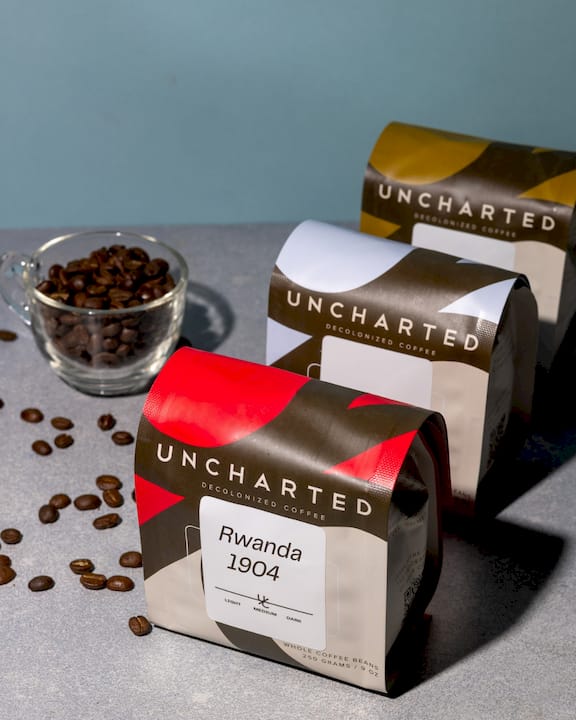
Everything in this guide works better when you start with coffee that was roasted with intention. At Drinkuncharted, the Limited Release collection features freshly roasted specialty beans that reward careful grinding, each one sourced from regenerative farms and roasted to highlight what makes the origin distinct. If you want to explore different coffees and see how grind size interacts with different flavor profiles, the Explorer Box gives you a curated range to work through. For cold brew fans, the Revive Cold Brew from Costa Rica’s highlands shows what a coarse grind and quality beans can produce together. Good grinding deserves good beans.
FAQ
What is the best coffee grinder for home use?
A conical burr grinder in the $60 to $180 range offers the best value for most home brewers, producing consistent grind sizes that improve extraction and flavor compared to blade grinders.
How fine should I grind coffee beans for espresso?
Espresso requires a fine grind with a texture similar to powdered sugar. The shot should pull in 25 to 30 seconds; if it runs faster, grind finer, and if it runs slower, grind coarser.
How long do ground coffee beans stay fresh?
Ground coffee begins losing flavor within minutes of grinding. For the best results, grind only what you need immediately before brewing and store whole beans in an airtight container.
Can I grind coffee beans without a grinder?
Yes. A blender, mortar and pestle, rolling pin, or the flat side of a heavy knife can all crack beans into usable grounds. These methods produce uneven results, so French press or cold brew are the most forgiving brewing methods to pair with them.
Why does my coffee taste bitter after grinding at home?
Bitter coffee typically means the grind is too fine, causing over-extraction. Make the grind one step coarser while keeping all other variables the same, then taste again before making further adjustments.